 ChargePort Hub
Can I use an existing 240V outlet for EV charging?
Maybe. A nearby 240V outlet can be a helpful starting point, but the outlet by itself does not confirm that it is suitable for your vehicle or charging equipment.
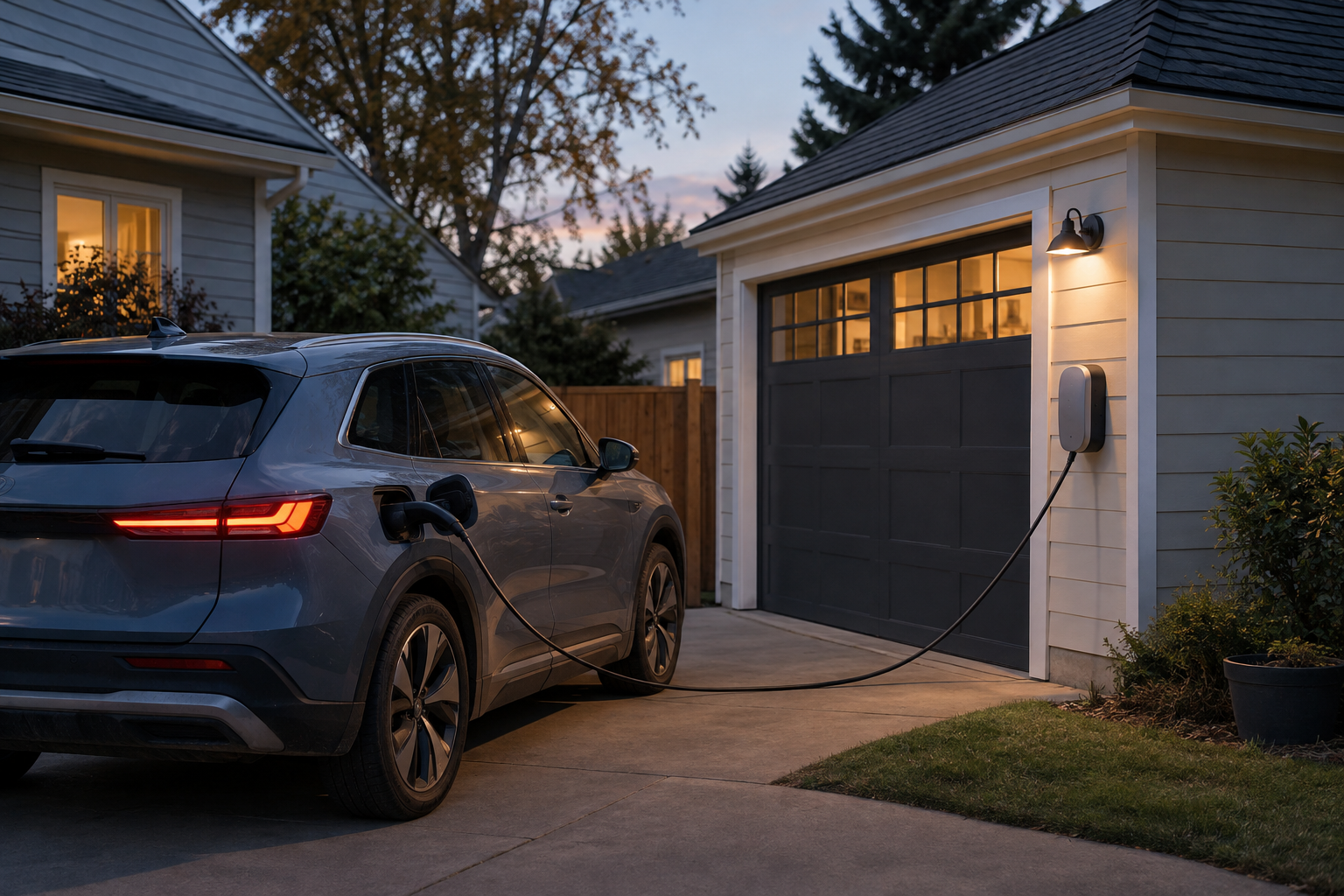
The parking location and cable route matter just as much as whether an outlet is nearby.
Why the outlet is only one part of the picture
People often notice a dryer style or garage outlet and assume the decision is finished. It is not. The charging equipment, vehicle, wiring, outlet condition, and electrical capacity all need to work together. ENERGY STAR recommends that a licensed electrician evaluate a home’s wiring, outlets, and other hardware for EV charging requirements.
What to ask an electrician to confirm
Bring the exact product details or manual, not just a photo of an outlet.
The vehicle should be able to connect without creating a poor cable route or an awkward everyday routine.
An older or rarely used outlet deserves an assessment before it becomes part of a regular charging routine.
This is a home specific question. Do not try to answer it from the labels you see on the panel.
When a dedicated setup may be the cleaner path
A dedicated setup may make more sense when the outlet is far from the parking area, in poor condition, shared with another use, or simply not a match for the equipment and routine you want. That is not a reason to panic. It is just a useful fact to know before choosing a product.
What to bring to the first conversation
- Your vehicle make and model, or its charging port type
- A photo of the parking area, not a photo of the electrical panel
- The distance and route from the outlet or panel area to where the vehicle parks
- The charging equipment you are considering, if any
- Your normal driving routine and the time the vehicle is parked overnight
Not sure what outlet you have?
The finder lets you choose “I am not sure” and still gives you a useful next step.