 ChargePort Hub
Planning home charging for two EVs: start with the routine, not two chargers.
Two EVs do not automatically mean you need two charging locations right away. The key question is whether one practical home setup can support the way both vehicles are actually used.
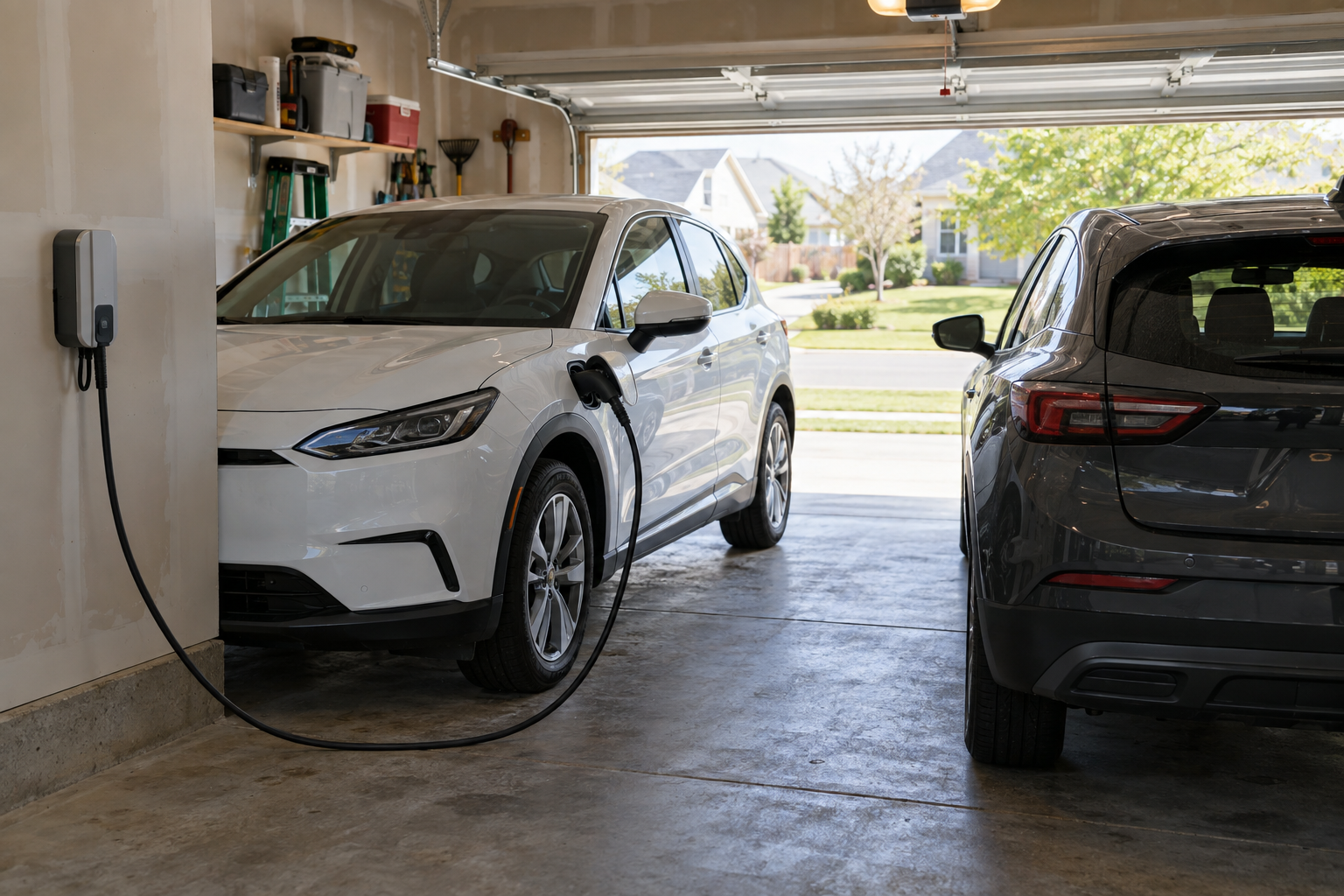
A two EV household starts with a conversation about where each vehicle parks and when each vehicle needs to charge.
Four questions that make the plan clearer
Some households can comfortably alternate nights or charge one vehicle more often than the other.
Parking layout can matter as much as charging speed.
Think about the higher daily driving vehicle or the one that leaves first in the morning.
Share that plan with the electrician, even if you are only installing one charging location now.
What to ask an electrician
Ask them to assess the home for your current charging needs and explain options for the parking layout you have. You can also ask what a future second charging location might involve. Do not try to calculate the home’s capacity or choose the final electrical design yourself.
Keep the decision flexible
There is no need to buy two matching products before you understand the routine. One vehicle may need the more convenient location today. Another may have enough time to charge later. The right setup should match your household rather than a generic idea of what a two EV garage looks like.
Where smart features fit
Some home charging equipment includes scheduling or other controls. Treat those as features to discuss after the electrician confirms the home setup and after you understand what each vehicle needs. They are not a substitute for the site assessment.
Start with the vehicle you charge most often.
Use the finder to build a first checklist, then mention the second EV when you speak with an electrician.